Standing up to racism
They saw a dream. She made it real.
Ama learned to swim in a river outside Kumasi. At her first meet in America, a girl told her people from Africa cannot swim.
Ama Mensah learned to swim the way her grandfather did, in the brown water of a river outside Kumasi, racing her cousins to a rock in the middle and back. When her family moved to the United States she was eleven, and the first thing she asked for was a pool.
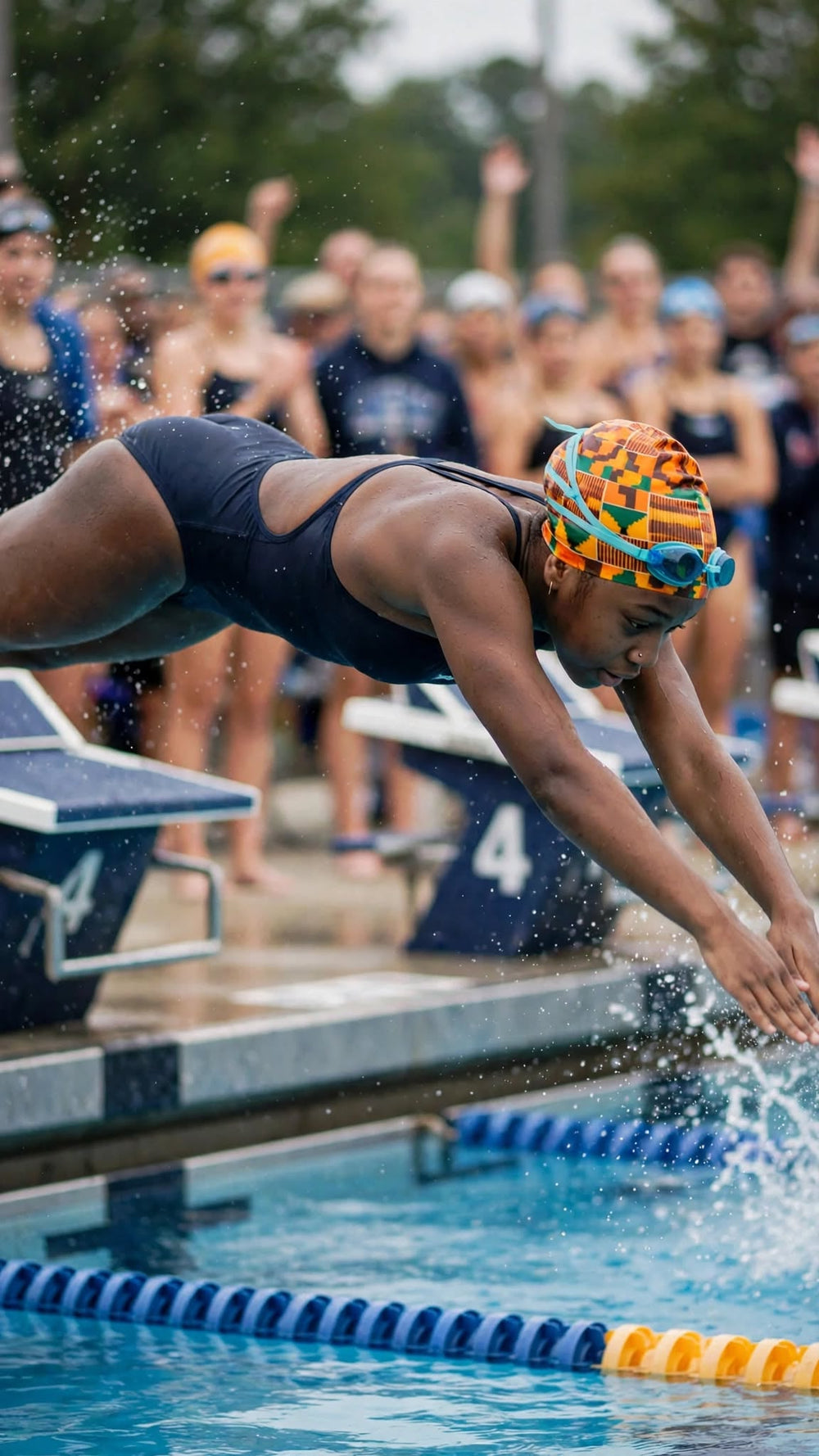
It took two years of 5 a.m. practices at the community center before her coach entered her in a real meet. She wore the cap her mother sewed for her from leftover kente cloth, the only one like it on the pool deck. Before her heat, a girl in a red and white team shirt looked her up and down and said it out loud: people from Africa cannot swim, can they? Ama did not answer. She held her goggles against her chest and tried not to let anyone see her cry.
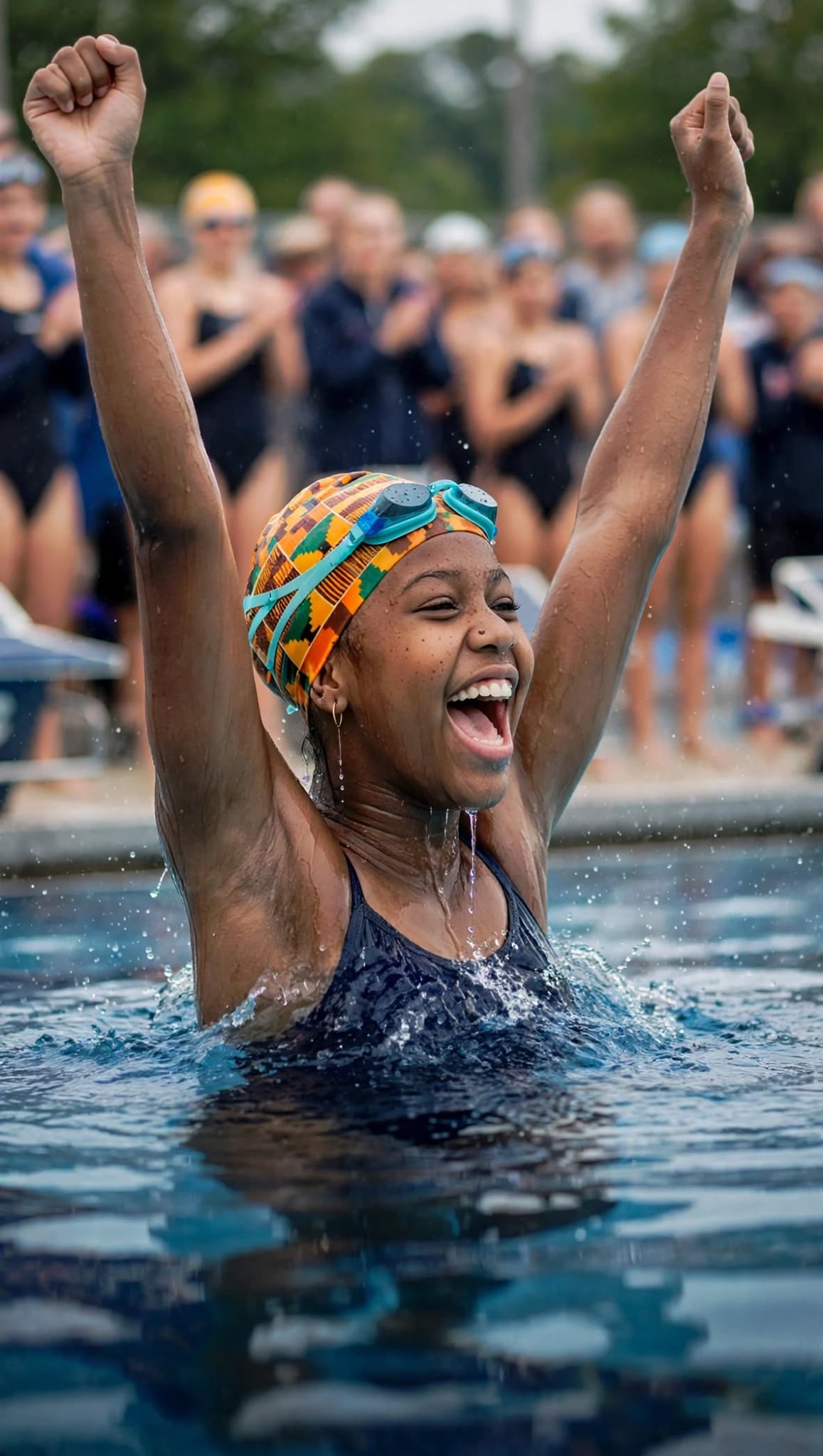
Then they called her lane. She stepped up to the block, heard the horn, and swam the hardest fifty meters of her life. When she touched the wall and looked up at the board, her name was at the top. Both fists went into the air. The crowd that had not known her name a minute earlier was on its feet.
Later, her coach put the gold medal around her neck in front of the whole team. Ama still swims at 5 a.m. She still wears her mother's cap. And when younger girls at the pool ask her how she got so fast, she tells them the truth: somebody told me I could not, and I believed the river more.
Somebody told me I could not. I believed the river more.
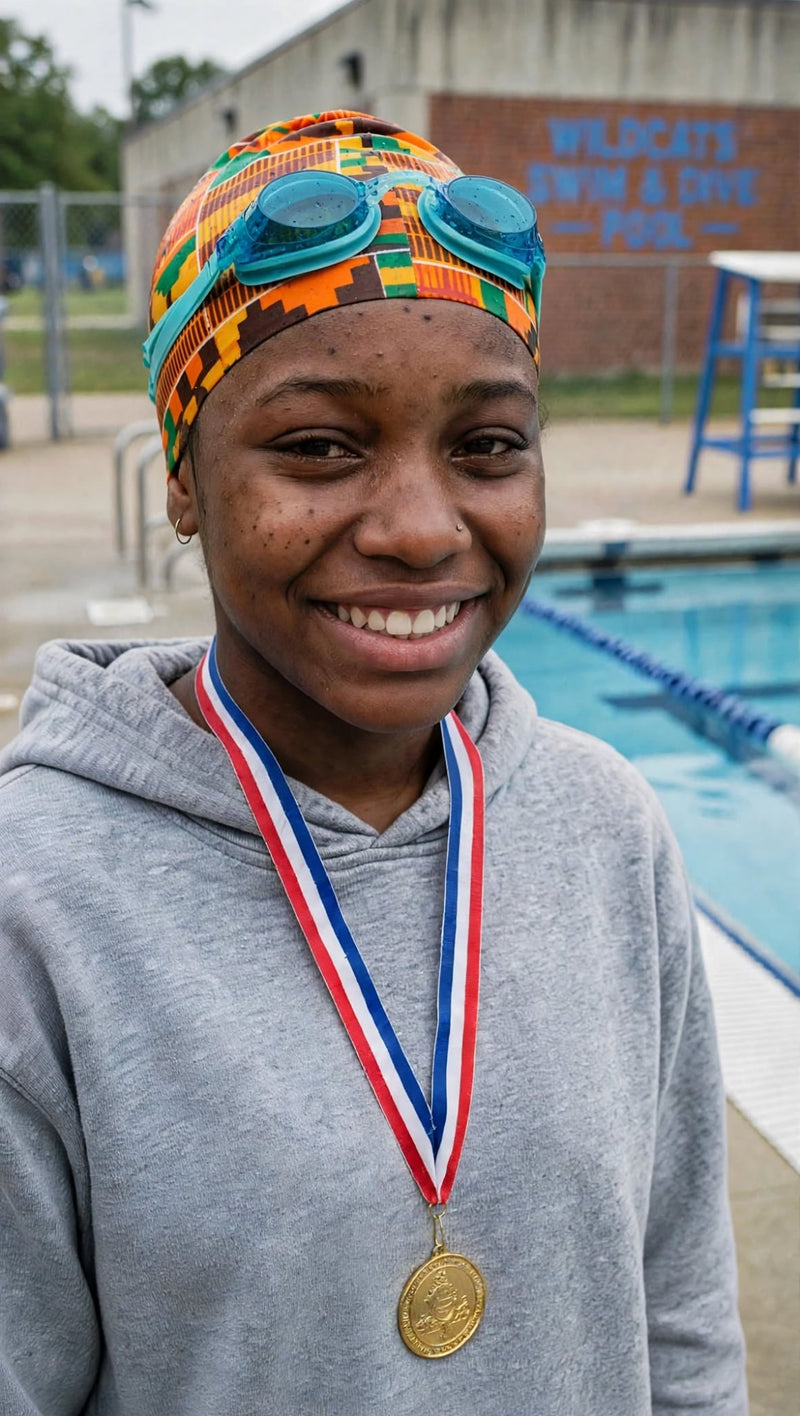
A fictional story inspired by a short AI-generated film on the Immigrant Voices USA Facebook page.
Carry the story
For the ones who were told they couldn't
For the first in the family to get there, and the people who got them there.